How Do We Learn?
Experiential learning: how we can learn with all the parts of our mind.

Everyone has heard of learning styles and maybe you know
that you are a visual learner, meaning that you learn best by seeing what you need to learn. You might identify more with hearing a lesson to learn or maybe you’re more tactile
and need to physically do whatever it is your learning to fully grasp it.
Classifying your learning style into one of three categories visual, auditory, or kinesthetic is really an over simplified version of what is truly going on in your mind. There
are several theories and constant ongoing research to help us understand how we
can best transfer knowledge from the
teacher to the students.
One of my favorite theories is David Kolb’s learning style
which he calls the Experiential Learning Cycle. Check out this fun video for an
overview of what experiential learning means.
Through our work as park service
professionals we are in a unique position to do so many experiential tasks that will
engage our minds to learn in fast and exciting ways. Our active job tasks engage
the whole mind and empower us to absorb information from experience. However the often forgotten side of experiential learning is that we must take the time to reflect on our experiences
in order to fully absorbs them into our mind.
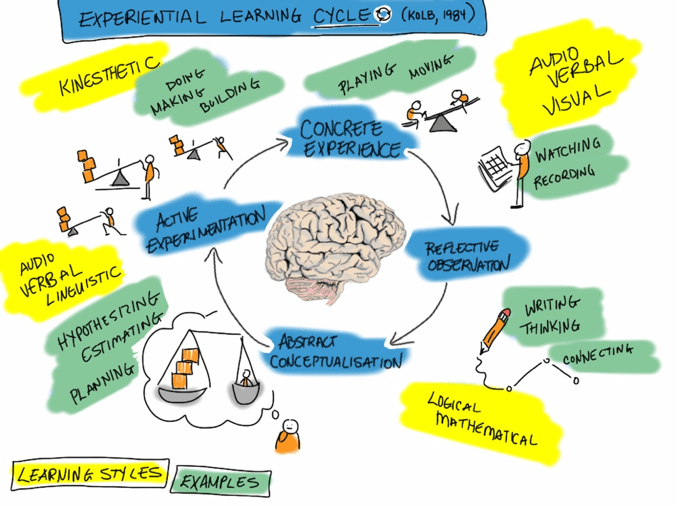
According to Kolb's Theory you can enter into the cycle on any one of the four learning stages but for effective learning to happen you must travel through all four of the stages. Below are some specific examples of each of the learning stages.
| Concrete experience | Reflective observation | Abstract conceptualization | Active experimentation |
|---|---|---|---|
|
|
|
|

Keep Learning!

No comments:
Post a Comment